Multimodal Data Annotation & Labeling
Globik AI delivers multimodal data annotation and labeling programs designed for enterprises and AI teams building systems that operate across images, text, audio, video, documents, sensor data, and time-based signals. The focus is not only on labeling individual data points, but on capturing context, relationships, and sequence across modalities so models learn how information behaves in real-world environments, supported by AI data preparation services and structured through dataset structuring and metadata management.
This capability is built to support large-scale, long-running AI programs where data quality, consistency, and adaptability directly impact production performance.
Classification &
Categorization
Globik AI supports classification and categorization at enterprise scale, aligned to evolving business taxonomies and domain-specific logic. Labeling frameworks are designed to remain consistent across large datasets while accommodating changes in regulatory requirements, product structures, or operational workflows, supported by dataset structuring and metadata management and scalable through AI data pipeline infrastructure.
How this supports enterprise use cases

Enables accurate document routing and workflow automation

Supports customer interaction analysis and quality monitoring

Improves transaction categorization for risk and compliance systems

Structures large content and knowledge repositories for AI consumption
Structured & Unstructured
Data Labeling
Globik AI works across both structured and unstructured data sources, enabling AI systems to learn from enterprise data as it exists across operational systems. This includes tables, logs, and records alongside emails, contracts, images, audio, video, and complex documents. Data pipelines are designed to integrate multiple formats into a unified learning framework, reducing fragmentation across AI initiatives.
How this supports enterprise use cases
Powers document intelligence and enterprise search platforms
Enables financial, legal, and compliance automation
Enhances customer analytics and operational intelligence
Supports cross-system data integration for AI training
Temporal & Sequence
Annotation
Globik AI delivers temporal and sequence annotation for data where meaning depends on order, duration, and transitions. Annotation workflows are designed to preserve context across video streams, audio conversations, sensor signals, and interaction logs. This capability enables AI systems to model real-world behaviors rather than isolated events.
How this supports enterprise use cases
Activity and behavior recognition systems
Conversational and voice-enabled AI platforms
Fraud detection and anomaly identification
Predictive maintenance and time-series analysis
Cross-Modal Alignment
(Vision-Language, Audio-Visual)
Globik AI enables cross-modal alignment by connecting related signals across different data types. This includes aligning visual content with text, synchronizing audio with video, and linking spoken commands with visual actions. These datasets are designed to support multimodal reasoning, retrieval, and generation use cases across enterprise and foundation models.
How this supports enterprise use cases
Multimodal foundation and generative AI models
Enterprise search, RAG, and knowledge systems
Content understanding and moderation platforms
Human-machine interaction and automation systems
Edge-Case & Rare
Scenario Labeling
Globik AI places deliberate focus on edge cases and rare scenarios that are underrepresented in standard datasets but critical for production reliability. Long-tail data is identified, sourced, and annotated to improve model resilience and reduce failure in high-risk conditions. This approach is particularly important in regulated and safety-critical domains.
How this supports enterprise use cases
Healthcare diagnostics and clinical decision systems
Financial risk, fraud, and compliance platforms
Autonomous, mobility, and robotics systems
Regulated and high-impact AI deployments
Model-in-the-loop
Annotation Workflows
Globik AI implements model-in-the-loop annotation workflows that integrate model predictions directly into the data lifecycle. Models assist with pre-labeling, prioritization, and confidence scoring, while human experts validate and refine outputs. This creates a continuous feedback loop that improves both data quality and model performance over time.
How this supports enterprise use cases
Large-scale, continuously evolving AI systems
Long-running production deployments
Rapid dataset iteration and improvement
Efficient scaling of annotation programs
Real-World Application Example
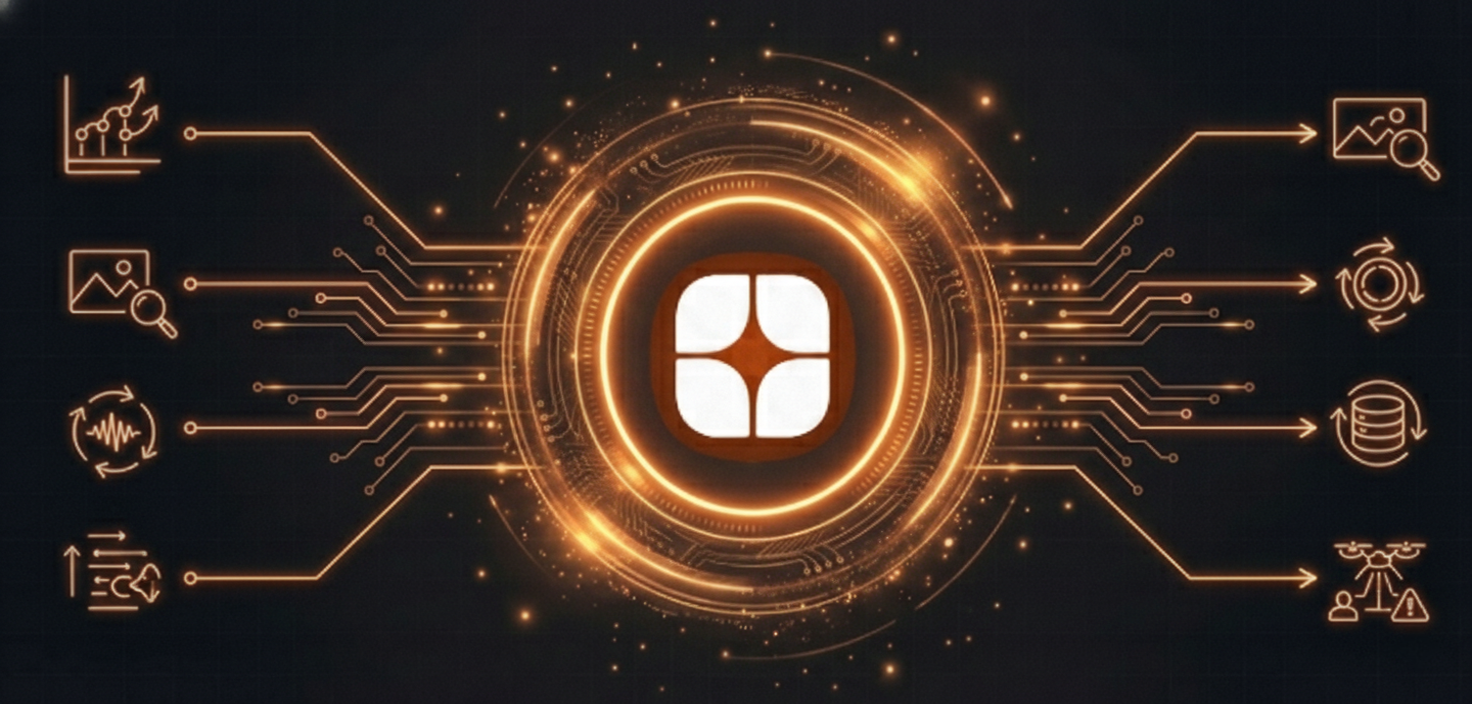
An enterprise operating across regions and languages deploys AI to automate document processing and knowledge extraction across internal systems. Data arrives as scanned documents, emails, images, voice notes, and operational logs.
Globik AI enables this system by structuring and annotating multimodal data end to end. Documents are classified by business context, structured and unstructured content is labeled consistently, temporal workflows are preserved, visual and textual elements are aligned, and rare or ambiguous scenarios are explicitly annotated.
The result is an AI system that understands information in context, improves automation accuracy, reduces manual review effort, and supports reliable decision-making across enterprise operations.
Why Enterprises Choose This Capability
Globik AI’s multimodal data annotation and labeling capability is designed for production environments where data diversity, scale, and quality determine success. By combining multimodal coverage, temporal understanding, cross-modal alignment, and targeted edge-case handling, this solution supports AI systems that perform reliably beyond controlled conditions.
Talk to an Expert
All Rights Reserved.