Most voice AI annotation assumes a finished recording: a complete audio file an annotator can listen to start to finish before labeling it. Real-time and streaming voice AI breaks that assumption entirely. Live captioning, real-time call-center transcription, and responsive voice assistants all have to understand and act on speech while it’s still being spoken, not after. That changes what the training data has to look like, and it’s a gap most voice AI conversations skip past.
A standard transcription model gets a full sentence and transcribes it, with the benefit of hearing exactly how it ends. A streaming model doesn’t get that luxury. It has to process audio continuously, make its best interpretation of a sentence while the speaker is still mid-way through it, and then revise that interpretation as more audio arrives, the same way live captions update on screen while someone is still talking.
This means the model has to learn two things recorded-audio systems never need to learn: how to act confidently on incomplete information, and how to gracefully revise an earlier guess once more context arrives. Neither skill comes from training on complete, finished recordings alone.
The underlying audio is still a real, complete recording, nothing about the source data changes. What changes is how that recording gets presented to the annotator during labeling.
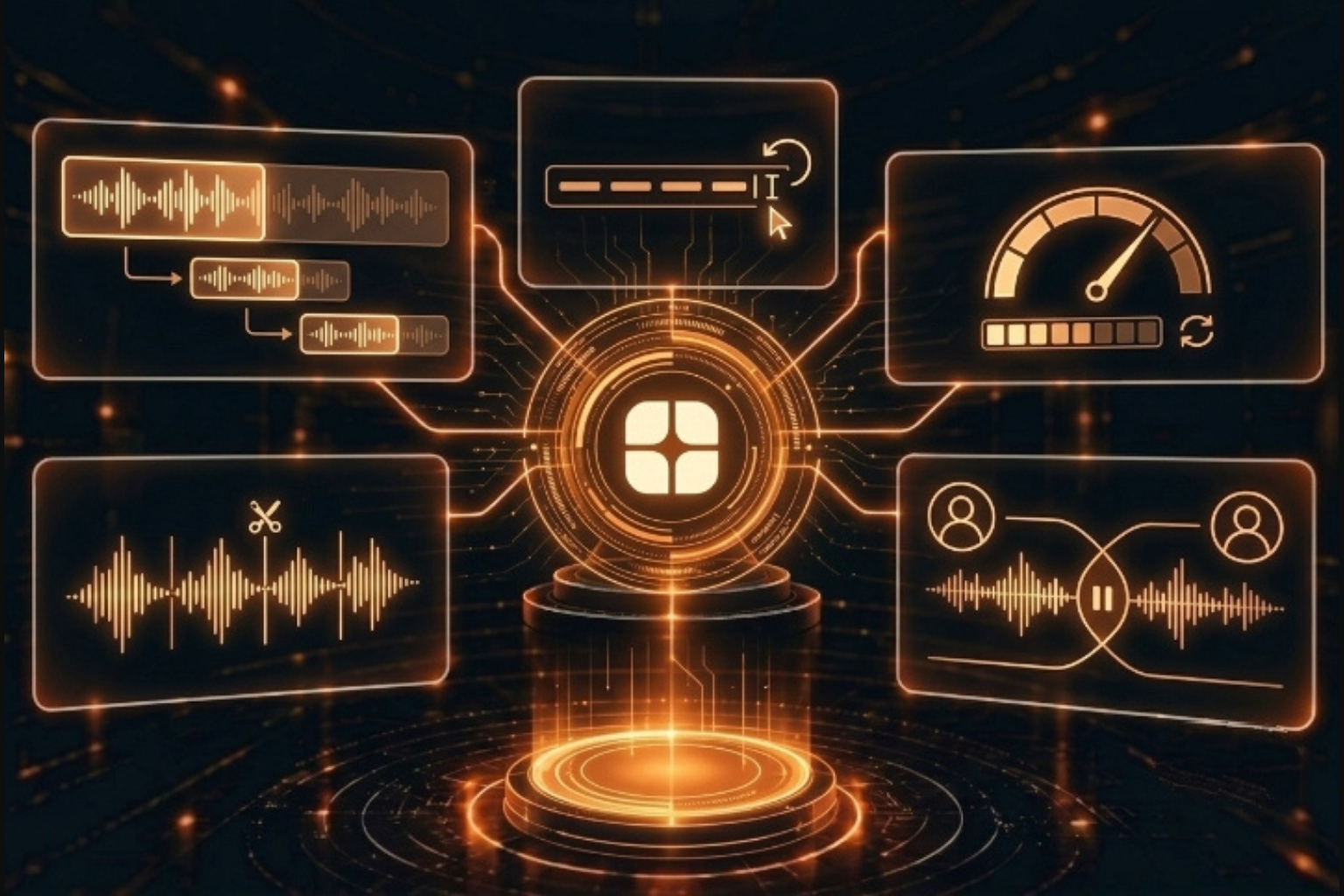
Instead of labeling a full sentence at once, the recording is deliberately segmented into progressive chunks, the first two seconds, then four, then six, and so on. The annotator labels each chunk using the actual, real words spoken, not a guess at what comes next, but captures what should reasonably be understood at that exact partial point, before the rest of the sentence has been heard. This simulates, during annotation, the exact constraint the model will face live: never getting a complete sentence before it has to respond.
This progressive-chunk approach supports several distinct annotation layers:
This isn’t a theoretical distinction, it shows up directly in products people use every day.
In every one of these, the product experience depends entirely on how well the underlying model was trained to handle incomplete information, which is exactly what progressive-chunk annotation is built to teach it.
A team that only has experience labeling complete recordings tends to default to full-sentence judgment, waiting to hear everything before deciding what it means. That instinct is exactly wrong for streaming work, and it’s a hard habit to unlearn without annotators who are specifically trained on progressive, partial-context labeling.
Dialect and accent variation make this harder still. A streaming model has even less margin for error than a recorded-audio model, since it’s committing to interpretations in real time with less context to fall back on. Annotation done by generalist, inconsistent labeling pools tends to default to the clearest, most standard-accent interpretation at each partial stage, which quietly degrades real-world performance for the speakers whose speech patterns don’t match that default.
This is where native-speaker, continuity-driven annotation matters more, not less, than with recorded audio, the same foundation behind Globik’s broader multilingual data labeling services, extended into the specific discipline of progressive, partial-context labeling that streaming systems depend on.
Before scaling a real-time or streaming voice AI dataset, a few checkpoints are worth running:
Real-time and streaming voice AI needs training data built around partial information, not complete sentences. That means progressive-chunk annotation using real, already-spoken audio, labeled for partial-utterance meaning, confidence and revision, safe segmentation points, and interruption handling. Recorded-audio annotation experience doesn’t automatically transfer here; streaming systems need annotators specifically trained to label fragments the way the model will actually encounter them, live.
Streaming voice AI has to interpret speech while it’s still being spoken, without hearing the full sentence first, unlike standard transcription of complete recordings.
Complete, real recordings are segmented into progressive chunks, and annotators label what’s understandable at each partial point using the actual spoken words.
No, annotators always use the real, already-spoken words as ground truth; what changes is how much of that real audio they’re shown at each labeling step.
Confidence labeling teaches the model when to commit to an interpretation versus when to hold it as likely to change, mirroring real-time decision-making.
Streaming models have less context to fall back on than recorded-audio systems, so inconsistent or non-native annotation disproportionately degrades accuracy for underrepresented speech patterns.