An AI tutor that gives the right answer isn’t automatically a good tutor. If a student asks why their algebra solution is wrong and the system just gives the correct answer, it technically succeeds but pedagogically fails. The student learns nothing about where their reasoning broke down. This is the core problem with treating AI tutoring training data like any other question-answer dataset: correctness and teaching are not the same thing, and training data built for one doesn’t automatically serve the other.
As AI-powered learning platforms scale rapidly, more companies are building tutoring systems, adaptive practice tools, and AI-assisted homework helpers. Most of them are trained the same way a general-purpose chatbot is trained: on question-answer pairs labeled for factual accuracy. That approach produces a system that can answer questions. It does not produce a system that can teach.
Standard question-answer annotation asks one thing of a labeler: is this answer correct? That’s sufficient for a search engine or a customer support bot, where the goal is to resolve a query as efficiently as possible. A tutoring system has a different goal. It needs to help a student build understanding, which sometimes means not giving the full answer immediately, and it needs to adapt its response to where a specific student is getting stuck.
Generic annotation has no mechanism for capturing any of this. A labeler marking an answer “correct” or “incorrect” isn’t being asked to evaluate whether the explanation actually teaches the underlying concept, whether the response matches a student’s apparent skill level, or whether a hint would serve the student better than a direct answer. Without that layer of judgment built into the training data, the resulting model defaults to what it was actually trained to do: answer the question as directly as possible, every time.
Question-answer pair creation for tutoring systems needs several layers that generic annotation skips entirely.
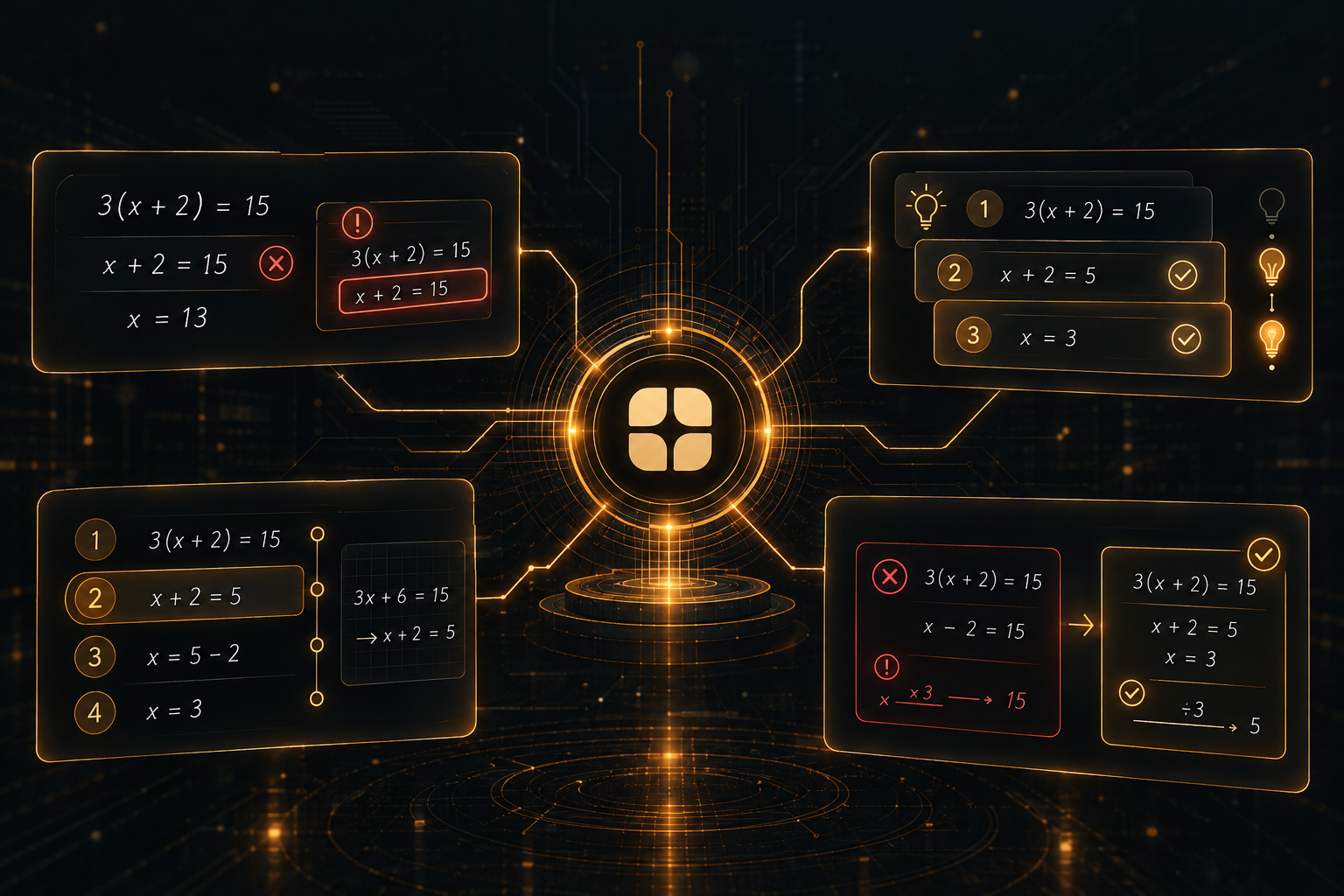
Good training data includes examples of graduated hints, not just final answers. A student struggling with a geometry proof might first need a nudge toward the relevant theorem, then a partial step, and only then a full explanation if they’re still stuck. Annotators need to label entire hint sequences, not single correct responses, so the model learns when to hold back information and when to provide it.
A tutoring model needs to show its work, not just its conclusion. Training data has to capture the intermediate reasoning steps that lead to an answer, labeled clearly enough that a model learns to walk through a problem the way a human tutor would, rather than jumping straight to a final result.
This is the piece most generic datasets miss entirely. When a student gets a problem wrong, there is usually a specific, recognizable reason why. Maybe they applied the wrong formula, dropped a negative sign, or misunderstood what the question was asking. Pedagogically useful training data labels not just that an answer is wrong, but what kind of error produced it, so the system can respond to the actual misconception rather than offering a generic correction.
The same concept needs to be explained differently depending on whether a student is encountering it for the first time or reviewing it before an exam. Training data needs to be tagged by learning level so a tutoring model can calibrate its explanations rather than defaulting to one fixed register.
None of this works with generalist labelers. Judging whether an explanation is pedagogically sound, whether a hint sequence is appropriately scaffolded, or what misconception produced a wrong answer requires someone who actually understands how students learn that subject, not just someone who can verify a final answer against an answer key.
This is why educational content annotation for tutoring systems needs to be done by qualified educators working within their subject area, not generalist annotators applying a generic rubric. A math teacher recognizes a sign error or a conceptual misunderstanding instantly. A generalist labeler can only check whether the final number matches.
A well-annotated tutoring dataset typically includes multiple response variants for the same question, scaffolding levels ranging from a light nudge to a full explanation, labeled student-error patterns tied to actual misconceptions, and skill-level tags that let a model adjust its tone and depth. Quality checkpoints should confirm that annotators have relevant subject-matter background, that scaffolded responses are reviewed for actual pedagogical soundness rather than just correctness, and that misconception labels are consistent across annotators working on the same subject.
Consider a student working through a word problem who sets up the wrong equation. A generic dataset labels the final answer “incorrect” and moves on. A pedagogically annotated dataset captures the full picture: the specific point in the setup where the student went wrong, a first-level hint that points to the misread quantity without giving it away, a second-level hint that reframes the question, and only then a worked explanation if the student is still stuck. Multiply that pattern across thousands of questions, subjects, and skill levels, and the difference between the two datasets becomes the difference between a tutor that drills answers and one that actually builds understanding over time.
Building an AI tutor that actually teaches, rather than one that just answers questions correctly, depends entirely on the training data it learns from. That data needs to capture scaffolding, reasoning steps, and misconception patterns, and it needs educators who understand pedagogy to create and review it. Generic Q&A annotation can build a system that answers questions. It can’t build one that teaches.
A correct answer alone doesn’t teach a student where their reasoning broke down or how to improve, which is the actual goal of tutoring.
It’s labeling graduated levels of help, from a small nudge to a full explanation, so a model learns when to hold back and when to assist.
Because responding to the specific reason a student got something wrong is far more useful than giving a generic correction.
Generally no, since judging pedagogical soundness and identifying misconceptions requires genuine subject-matter teaching experience.
It lets a model adjust explanation depth and tone to match where a specific student actually is, rather than using one fixed response style.